
Get updates
Have a parenting hack to share? Or a topic you'd like to see?
Why kids fight bedtime and what parents can do about it

Contributing Authors
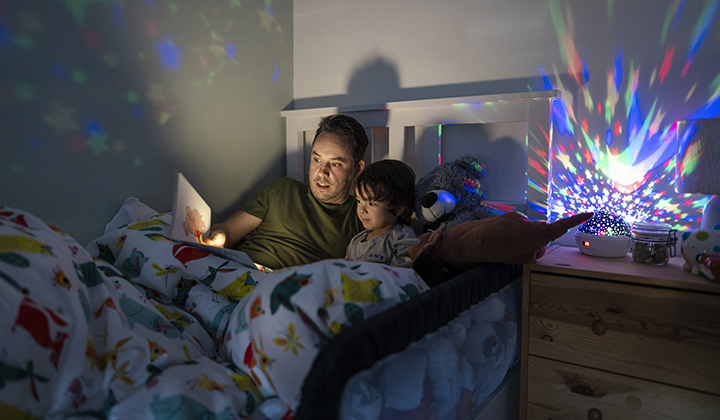
If you feel like your kids fight bedtime on a nightly basis, you're not alone. “One more story. One more hug. One more glass of water.” Many kids seem to find endless reasons to stay awake, even when they're clearly tired.
The good news? Bedtime resistance is normal and often tied to a child's development. Understanding why it happens can help, so keep reading for child sleep tips so you can create calmer evenings and better sleep for the whole family.
Why do kids fight bedtime?
There isn't a simple answer for bedtime battles. Sometimes tired kids actually get a burst of energy when they stay up too late. Their bodies can release stress hormones that create a "second wind," making it harder for them to settle down.
Other kids are still processing a busy day filled with bright lights, screens, activities and excitement. Some kids may also struggle with anxiety, ADHD or racing thoughts that make it difficult to relax at night.
For toddlers and younger kids, bedtime can also become a way to test limits and gain a sense of control. That's a normal part of growing up.
The real reason behind ‘one more’
The most common of bedtime battles almost every parent has experienced? The never-ending "one more." When your child asks for another story or another drink of water, they may be looking for more than just a delay.
Many kids may experience separation anxiety at bedtime and are seeking connection, comfort and reassurance. Bedtime often becomes a natural negotiation zone where kids test boundaries while also trying to stay connected.
That doesn't mean you need to give in to every request. Instead, recognize the need behind the behavior while maintaining clear and consistent limits.
When is it more than typical stalling?
A helpful question for parents is not just "What is my child doing?" but "Why are they doing it?"
Typical bedtime resistance often improves when parents calmly set a limit and become predictable/consistent with the limit. A child may protest briefly but eventually settles down.
Anxiety may look different. Watch for signs such as:
- Extreme distress when separating from a parent
- Repeated worries about something bad happening
- Ongoing fears that keep your child from falling asleep
- Anxiety that also shows up during the day
Pay attention to the intensity, frequency and impact of these behaviors. If concerns continue, talk with your child's pediatrician to help with the separation anxiety at bedtime.
Common bedtime mistakes parents make
After a long day, it's easy to do whatever works in the moment. But 2 common mistakes can accidentally make bedtime struggles worse.
Being inconsistent
If a rule changes from night to night, kids may keep testing to see what will happen. Consistency helps them know what to expect.
Accidentally rewarding delays
If getting out of bed always leads to extra attention, privileges, or even just a brief conversation, kids may learn those behaviors successfully delay bedtime.
Simple bedtime strategies that work
The most effective bedtime routines don't have to be complicated. Try these expert-backed child sleep tips:
- Create a predictable bedtime routine
- Choose calming activities before bed
- Keep wake-up times consistent, even on weekends
- Make sure bedtime matches when your child is actually sleepy
- Praise positive bedtime behaviors and cooperation
A consistent routine helps signal to the brain and body it's time to wind down and get ready for sleep.
What to do when your child keeps getting out of bed
First, make sure your child's basic needs are met, including a bathroom trip, a drink of water and a chance to connect with you.
After that, the best response is often the simplest. Calmly walk your child back to bed with as little conversation as possible. Long discussions can unintentionally reward the behavior. A brief, predictable response is usually more effective.
A reminder for exhausted parents
Bedtime doesn't have to be perfect to get better. Sleep is a skill that develops over time and some kids need more support learning how to settle themselves at night.
Change rarely happens overnight. In fact, kids may push back as they adjust to new expectations. That doesn't mean your approach isn't working.
The key is finding a bedtime strategy that works for your family and sticking with it. Consistency, patience and realistic expectations can help make bedtime less stressful and help everyone get the rest they need.
Contributing Authors
Get updates
Have a parenting hack to share? Or a topic you'd like to see?
Related Posts
- Hitting and biting: what parents need to know
- Debunking myths about COVID-19
- How to promote diversity and inclusion in your child’s life
- What every parent should know about preventing child trafficking
- The No. 1 rule about cleaning out earwax
- Food allergies: are more kids allergic to food or are we just more aware?
- Bedwetting: What causes it and when to be concerned?
- The great cover-up
- All about strep throat
- A parent’s guide to discussing white privilege