
Get updates
Have a parenting hack to share? Or a topic you'd like to see?
The truth about kids’ skincare trends

Contributing Authors
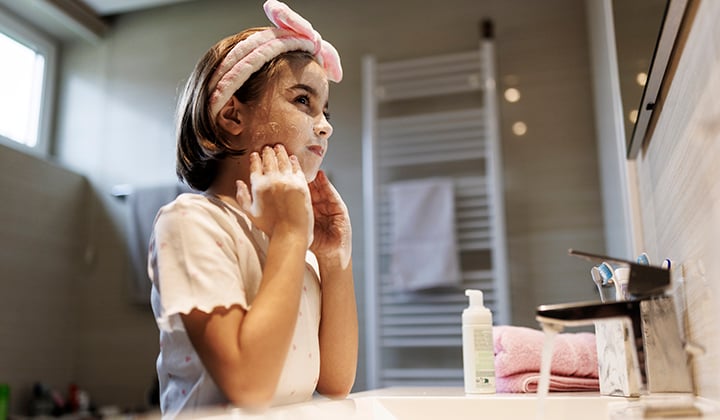
If you’ve noticed tweens buzzing about serums, retinol or 10-step routines, you’re not alone. Social media has pushed grownup skincare into kid spaces and many parents are left wondering what’s actually safe for young skin. The good news is that keeping kids’ skin healthy doesn’t have to be complicated or expensive. In fact, dermatologists agree less is more.
Below, we break down kids’ skincare needs, what they should avoid and how parents can set healthy boundaries without turning skincare into a power struggle.
What young skin actually needs
The best skincare for kids is just 3 simple steps:
- Gentle cleanser
Kids should wash their face twice a day with a fragrance-free cleanser. Harsh scrubs and exfoliants can irritate their delicate skin. - Lightweight moisturizer
Choose a noncomedogenic (oil free) moisturizer every night, even for kids with oily skin. - Daily sun protection
This is the big one. Broad spectrum SPF 30+ mineral sunscreen should be used every day, even when it’s cloudy. Tinted mineral sunscreen can be a great option for deeper skin tones.
Why kids should avoid retinol and anti-aging products
Anti-aging ingredients like retinoids, acids and vitamin C were designed for adult skin concerns, not kids. Children’s skin is thinner, more sensitive and more prone to irritation. Overusing these products too early can lead to redness, long-term sensitivity and a weakened skin barrier.
What to look for and what to avoid on labels
Like anything else, there are ingredients that are good – and not so good – when it comes to skincare.
Ingredients that help:
- Ceramides
- Hyaluronic acid
Ingredients that can harm:
- Alcohols that strip the skin
- Fragrances that irritate
- Harsh peels
- Products labeled anti-aging, wrinkle reducing, brightening or firming
If your child is dealing with acne, products labeled “oil free” or “noncomedogenic” are safer starting points than anything marketed as anti-aging.
The most common mistakes tweens and teens make
A few patterns keep showing up:
- Skipping sunscreen, which increases risk of skin cancer and early wrinkles.
- Using too many products because of trends.
- Choosing products made for adults instead of kids.
It’s easy to get swept up in social media routines, but kids’ skin doesn’t need a complicated lineup.
Setting healthy boundaries without judgment
Kids skincare can be a positive way for them to care for themselves, as long as parents help guide them.
- Keep the focus on having clean, healthy, protected skin.
- Check ingredient labels together and talk about what each product does.
- Ask your child why skincare matters to them.
- Step in if the routine becomes obsessive or tied to negative body image.
Above all, model a healthy relationship with skincare and celebrate the skin they’re in.
When it’s time to call a pro
Some issues need more than over-the-counter help.
For eczema:
Use gentle, fragrance free products, thick moisturizer and mineral sunscreen. If itching or rash isn’t improving, call your pediatrician or a dermatology provider.
For acne:
If you're looking for acne treatment for teens or tweens, start with oil free or noncomedogenic products and introduce benzoyl peroxide or retinoid gels slowly. If acne is hurting your child’s confidence or leading to scarring, it’s time for professional support.
A simple dermatologist-approved routine for kids
Morning
- Gentle fragrance-free cleanser
- Oil free moisturizer
- Oil free SPF 30+
Night
- Gentle fragrance-free cleanser
- Oil free moisturizer
That’s it. No serums, no expensive treatments, no complicated steps.
One skincare myth we’d love to retire
You don’t need pricey products to get healthy skin. Most kids do best with simple, gentle basics.
At the end of the day, the best skincare for kids doesn't include complicated routines or expensive products. They need gentle basics, a little guidance and reassurance that their skin is already doing what it’s supposed to do. When we keep things simple and stay curious about what they’re seeing online, we turn skincare into something healthy instead of something stressful. And that’s the part that matters most — helping them feel good in the skin they’re in.
Contributing Authors
Get updates
Have a parenting hack to share? Or a topic you'd like to see?
Related Posts
- Hitting and biting: what parents need to know
- Debunking myths about COVID-19
- How to promote diversity and inclusion in your child’s life
- What every parent should know about preventing child trafficking
- The No. 1 rule about cleaning out earwax
- Food allergies: are more kids allergic to food or are we just more aware?
- Bedwetting: What causes it and when to be concerned?
- The great cover-up
- All about strep throat
- A parent’s guide to discussing white privilege