Get updates
Have a parenting hack to share? Or a topic you'd like to see?
Opioid and fentanyl awareness: Essential tips for parents

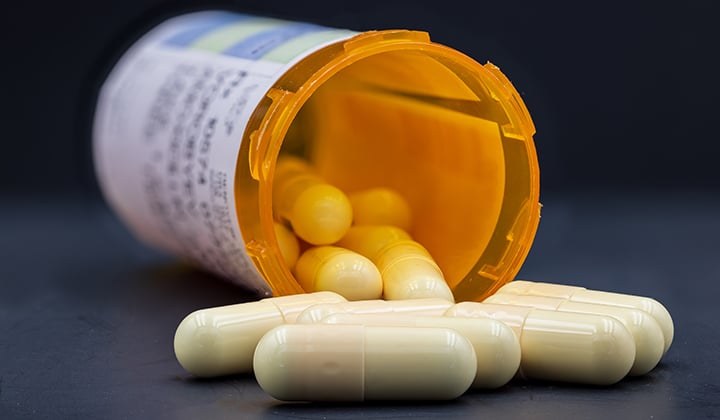
If talking about opioids makes your stomach drop, you’re definitely not alone. Between scary headlines, rising overdose rates and the explosion of counterfeit pills online, it feels like the risks to kids and teens are changing faster than parents can keep up.
Here’s the good news: you don’t need to be an expert to help keep your family safe. What you do need is clear, honest information — especially about fentanyl — and a few simple habits that make a big difference. Keep reading to get educated on opioid and fentanyl awareness.
The opioid crisis has changed — and kids are now at real risk.
Twenty years ago, opioid misuse felt like an “adult issue.” Not anymore, and the opioid crisis is real.
- In 2021, 1,657 young people under age 20 died from opioid overdoses.
- 94% of those deaths involved fentanyl.
- Overdose/poisoning is now the 3rd leading cause of death for kids and teens in the U.S. behind firearm injuries and car accidents.
- More than 300,000 children lost a parent to overdose between 2011 and 2021.
In the Emergency Department, we’re seeing:
- teens overdosing after taking counterfeit pills
- kids experiencing opioid withdrawal
- families blindsided because they truly didn’t know the risks
This is the youth health crisis of our time, and fentanyl is at the center of it.
So… why is fentanyl so dangerous?
Here’s the simplest way to explain it to teens (and honestly, to adults too):
Fentanyl is incredibly potent.
It only takes a tiny amount (think a few grains) to cause an overdose. We use fentanyl safely in hospitals every single day, because doses are exact and carefully monitored.
But illegal fentanyl is a whole different story.
- It’s often illicitly manufactured with no quality control.
- Pills sold as “Xanax,” “Percocet” or “Adderall” may contain massive, inconsistent doses of fentanyl.
- Teens can’t tell a real pill from a fake one. No one can.
This is why we tell teens the truth:
Any pill not prescribed directly to you could contain fentanyl — and one pill can kill.
Start medication-safety conversations early (and keep them chill).
Talking about opioids shouldn’t feel like a one-time “serious talk.” It should feel like lots of small conversations over time.
For younger kids:
“Medicine only helps the person it’s meant for. Never take someone else’s medicine.”
For older kids and teens:
Keep the tone nonjudgmental. Stay curious. Ask what they’ve seen online, at school or in their feeds. That keeps the conversation open — not shut down.
Teach teens how to spot risky situations, especially online.
Counterfeit pills aren’t just coming from “dealers.” They’re coming from social media, group chats, encrypted apps and e-commerceish spaces teens use every day.
And here’s the bottom line:
Teens cannot visually identify a counterfeit pill.
Fake pills look exactly like legitimate prescription medications. Many overdoses we see come from pills that teens truly believed were safe.
Share this with them:
“If you didn’t get it directly from a pharmacy with your name on it, it’s not safe. Not even once.”
Lock up medications at home — every time.
Most youth opioid misuse starts with medications found at home.
To lower the risk:
- Use a locked medication box (your care team can provide one or you can find them online).
- Don’t rely on high shelves or hidden spots — kids are curious.
- Dispose of unused prescriptions through safe drop-off programs
Even if you trust your child, locking up medications removes temptation for anyone who might come into your home. It’s a simple prevention step that works.
Keep naloxone (Narcan®) at home. Yes, really.
If there’s one message we want every parent to hear, it’s this:
Naloxone availability can save lives, and every household should have it.
These are the exact kids we see in the ER: teens who thought they were taking a Xanax, or a study pill, totally unaware it was laced with fentanyl. Naloxone can save their life.
Why naloxone matters:
- It’s extremely safe.
- It won’t harm someone who isn’t overdosing.
- It’s available over the counter as a simple nasal spray.
- It can reverse an opioid overdose within minutes.
If a teen suspects a friend is overdosing:
- Call 911 immediately.
- Administer naloxone if it’s available.
- Get an adult right away — no one gets in trouble for saving a life.
This is exactly the kind of situation where naloxone makes the difference between life and death.
What parents can do today
- Have short, honest, judgment-free conversations.
- Normalize asking questions about medications.
- Remind teens regularly that counterfeit pills are everywhere.
- Lock up prescription meds.
- Keep naloxone at home — and know how to use it.
A quick heads‑up about nitazenes (the ’new’ synthetic opioids)
Recently, state health agencies have issued alerts about nitazenes, a newer group of powerful synthetic opioids showing up in Missouri and other states. They’re not approved for medical use, and early reports suggest they may be even stronger than fentanyl. Even scarier: they’re being mixed into counterfeit pills and powders, so people often don’t know they’re taking them.
For parents, the message is simple: If a pill didn’t come from a pharmacy with your child’s name on it, it’s not safe — and could contain fentanyl, nitazenes or both.
Naloxone (Narcan®) can still help in a nitazene overdose, but because these drugs are so potent, more than one dose may be needed. This is another reason it’s important to keep naloxone at home and know how to use it.
You don’t have to be perfect. You just have to be prepared.
Learn more
Assistant Program Director, Pediatric Emergency Medicine Fellowship; Clinical Associate Professor of Pediatrics, University of Missouri-Kansas City School of Medicine; Clinical Assistant Professor of Pediatrics, University of Kansas School of Medicine