
Get updates
Have a parenting hack to share? Or a topic you'd like to see?
Pediatric emergency preparedness: Tips for parents

Contributing Authors
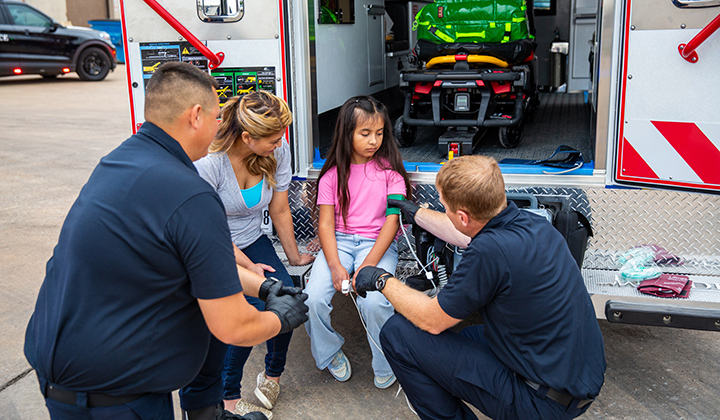
When your child has a medical emergency, your brain is racing, your heart is pounding and everything feels like it’s happening all at once. That’s exactly the moment emergency medical services (EMS) steps in. Pediatric-trained EMS providers are trained to care for kids on what might be one of the scariest days of their—and your—life. This is why pediatric emergency preparedness matters long before an ambulance arrives.
While you can't predict when an emergency will happen, you can do your best to be prepared when the situation arises. Keep reading to learn what pediatric EMS workers really wish parents knew when it came to emergencies with kids, and how childhood emergency preparedness tips can make a difference.
It may feel chaotic, but there is always a plan
When EMS arrives, parents may notice the situation feels fast, overwhelming and sometimes even chaotic. What’s important to know is that everything happening follows a clear and structured process designed to give your child the best possible care.
Pediatric EMS workers are trained to ask a lot of questions while providing care, even when it looks like they are multitasking. On more stable calls, especially in calm home environments, they may move more slowly and explain each step as they go. In more critical situations, like traumatic injuries or cardiac arrest, they may move quickly without offering explanations in the moment.
That doesn’t mean parents are being ignored. It means lifesaving care is the priority. Sometimes, if the environment feels unsafe or highly stressful, EMS may move your child directly to the ambulance before completing a full assessment. No matter how it looks from the outside, every action is intentional and focused on your child’s safety and health - another reason child emergency preparedness helps families feel more in control.
Small preparations make a big difference in emergencies
In an emergency, simple preparation can save valuable time and reduce stress for everyone involved. Having a list of your child’s medications, medical history, diagnoses and known allergies easily accessible helps EMS make faster and more informed decisions. This information can be printed on your fridge, saved on your phone or stored in a medical ID app, especially if your child has complex medical needs. Consider using a children’s emergency medical ID card or app and keeping a backup children’s emergency medical ID in your go‑bag as part of pediatric emergency preparedness.
Your child’s comfort also matters. Allowing them to bring a favorite toy, blanket or comfort item can help them cope with a stressful situation and feel more secure during care and transport. These simple childhood emergency preparedness tips can make a hard day a little easier.
Some things parents worry about just don’t matter in the moment
Many parents worry about making sure their child is fully dressed or wearing shoes before leaving for the hospital. In an emergency, those details simply don’t matter.
EMS providers have blankets to keep your child warm and they do not expect kids to walk anywhere. In fact, during breathing‑related emergencies, they often need to see your child’s chest and belly to properly assess them. Clothes and shoes can always be handled later. Your child’s immediate care is what matters most. Pediatric emergency preparedness focuses on what counts—information, access and calm—rather than appearances.
Kids need a different approach than adults
Kids are not just small adults. Pediatric calls require a completely different approach. Adults generally understand EMS IS there to help, but kids may see strangers and feel afraid. That means EMS will slow down emotionally even when things feel urgent. They use patience, reassurance and simple explanations to help kids feel safe.
Kids are curious and often ask why. Answering those questions helps build trust. Medically, children’s bodies can change quickly. They can get sick fast but they can also improve fast. That’s why EMS workers are constantly reassessing kids throughout care. Child emergency preparedness at home (like practicing how to call 911 or role‑playing medical visits) can support this approach.
Calm, prepared parents make a real impact
One powerful example involved a parent whose child was having a severe asthma attack. Despite being understandably scared, this parent stayed calm and organized. She knew when symptoms started, what medications were given and what triggers may have caused the attack.
She also helped keep her child calm while sharing clear and detailed information. That combination allowed EMS to quickly understand the situation, create a plan and stabilize the child more efficiently. It showed just how impactful a calm and prepared parent can be during an emergency and was proof that childhood emergency preparedness tips truly work.
An emergency prep hack every parent should know
Have your child’s medical information ready and easy to access before an emergency happens.
In high stress moments, it is incredibly hard to remember every detail, even things you know well. Keeping medications, medical history and allergies written down or stored digitally removes pressure from you and allows EMS to begin treatment faster and with confidence. A children’s emergency medical ID—physical or digital—paired with other childhood emergency preparedness tips is key to pediatric emergency preparedness.
How EMS helps kids feel safe, and how parents can help
Helping kids feel safe starts with connection. Pediatric EMS providers get down to a child’s level, speak directly to them and explain what they are doing in simple, age appropriate language. Honesty is important. Avoiding or sugarcoating information can sometimes increase fear, while clear and gentle explanations build trust. Distractions also help. Letting a child hold equipment like a stethoscope or focusing on something familiar, like a favorite show, can ease anxiety.
Parents can build this comfort at home by reading books about first responders, visiting fire stations or attending Touch‑a‑Truck events. Familiarity with emergency helpers and equipment can reduce fear when it matters most.
During an actual emergency, one of the most important things to remember is that kids feed off their parents’ emotions. Staying as calm as possible helps your child stay calmer too. Being calm, honest, supportive and focused allows you to be part of the solution during one of your child’s most vulnerable moments.
Get updates
Have a parenting hack to share? Or a topic you'd like to see?
Related Posts
- Hitting and biting: what parents need to know
- Debunking myths about COVID-19
- How to promote diversity and inclusion in your child’s life
- What every parent should know about preventing child trafficking
- The No. 1 rule about cleaning out earwax
- Food allergies: are more kids allergic to food or are we just more aware?
- Bedwetting: What causes it and when to be concerned?
- The great cover-up
- All about strep throat
- A parent’s guide to discussing white privilege