Get updates
Have a parenting hack to share? Or a topic you'd like to see?
AI understanding for kids: A parent’s guide

Contributing Authors
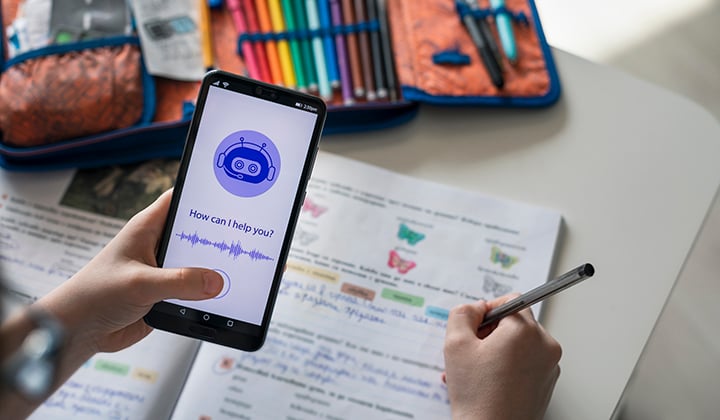
Have you noticed how often you must prove you are human online? At the same time, technology is getting better at pretending to be human. Today’s artificial intelligence (AI) can create images, videos and conversations that feel real, even when they are not. This can be confusing for kids. For parents, it raises important questions about AI understanding for kids and the broader AI impact on children.
Helping kids understand the difference between AI and real people is not about fear. It is about building trust, critical thinking and healthy relationships. AI responses can often feel correct, authoritative, genuine and real to the users. In many ways, these conversations are early literacy lessons about the digital world. They are also an important part of teaching AI literacy through everyday lessons for kids and teens.
Why it matters for kids
Kids learn how to trust the world through real relationships. They learn from parents, caregivers and other adults who show up, take responsibility and care about their feelings. That kind of trust helps kids feel safe, confident and understood.
AI can sound friendly, caring and sure of itself. But it is only copying patterns. AI does not think, feel or take responsibility. When kids treat AI like a real person, it can blur important lines. It may also lead kids to overshare personal information or rely on technology when they really need help from a trusted adult. This is one way the AI impact on children can show up in day-to-day life. It is also why teaching AI literacy through simple lessons for kids is so important.
There is also the question of values. AI learns from large amounts of information provided by many sources of training data. That training data can be incomplete, biased or wrong. AI does not know right from wrong. Kids do best when their values are shaped through real conversations and guidance from people who know them well. Thoughtful literacy lessons about media and technology can support healthier AI understanding for kids over time.
Signs kids may be feeling overwhelmed
Kids today see a mix of real videos, fake videos, AI art and chatbots every day. This can lead to what some experts call digital stress. You might notice:
- Strong emotional reactions to content that turns out to be misleading.
- Repeating information without knowing where it came from.
- Treating AI answers as always correct.
- Spending more time online.
- Spending less time talking or playing in the real world.
If you see these signs, it may help to slow things down.
- Take breaks from screens.
- Make time for offline activities to help reset the balance.
- Use these pauses for short literacy lessons to help kids learn about how AI works and how it can affect their feelings.
Simple ways to explain AI to kids
You do not need a technical lesson. Start by asking what your child already knows about AI. Then build from there. This kind of back-and-forth is a simple form of teaching AI literacy and supports AI understanding for kids in a natural way.
Comparisons work well for younger kids:
- “AI is like a very smart parrot. It repeats words it hears, but it does not understand them.”
- “AI is a really good guessing machine. It sounds right, but it is not always right.”
You can be more direct with older kids and teens:
- “AI learns patterns from a lot of information and predicts what comes next. It does not actually think or feel.”
- “AI is like GPS. It gives suggestions, but you still have to decide what to do.”
These conversations help kids understand that AI can sound confident without being correct. Over time, these small lessons for everyday life become powerful literacy lessons that reduce the negative AI impact on children.
Skills that help kids question what they see
Focus on building habits instead of trying to spot every fake. One helpful habit is pause and check. If something feels shocking, exciting or upsetting, encourage kids to stop before reacting or sharing.
You can practice asking:
- Where did this come from?
- Who made it?
- Can I find it somewhere else?
- Does anything feel off?
For urgent messages:
It helps to have a simple family plan like a text that seems to be from a family member asking for help. This might include calling to double check or using a shared code word. These are practical lessons for staying safe and are a key part of teaching AI literacy at home.
How to talk about AI without causing fear
The goal is curiosity, not anxiety.
- Keep the conversation open and ongoing.
- Stay calm and interested.
- Share how you think through things out loud.
- Talk about both the benefits and limits of technology to give kids a balanced picture of the AI impact on children and families.
When parents put devices away and prioritize real connection, they are modeling balance for kids to learn and do the same. These skills matter not just for AI, but for life. They strengthen the overall AI understanding for kids as they grow.
The bottom line
AI is not going away. Kids do not need to become experts, but they do need support. Real relationships, honest conversations and a little healthy skepticism go a long way. Kids are better prepared to navigate a world where the lines are not always clear when families talk openly about what is real and what is not, and when parents weave in simple literacy lessons and lessons for safe, smart tech use. Teaching AI literacy in everyday moments helps protect kids and supports a healthier digital future for them.
Additional Resources:
- Video: Deep clean technology devices to promote mindful use
- Children’s Mercy Developmental and Behavioral Health
- UNESCO’s AI competency framework for students
Contributing Authors
Get updates
Have a parenting hack to share? Or a topic you'd like to see?
Related Posts
- Hitting and biting: what parents need to know
- Debunking myths about COVID-19
- How to promote diversity and inclusion in your child’s life
- What every parent should know about preventing child trafficking
- The No. 1 rule about cleaning out earwax
- Food allergies: are more kids allergic to food or are we just more aware?
- Bedwetting: What causes it and when to be concerned?
- The great cover-up
- All about strep throat
- A parent’s guide to discussing white privilege