
Get updates
Have a parenting hack to share? Or a topic you'd like to see?
Lice treatment: Understanding head lice

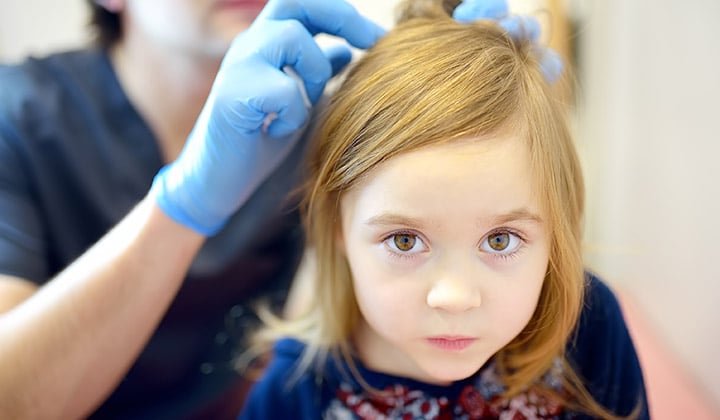
If you’ve ever gotten that email from school — “We’ve had a case of lice in the classroom…” — you know the instant itch that follows. Yep, lice happen. They’re annoying but they’re not a sign of poor hygiene or bad parenting. Here’s the lowdown so you can learn what lice are, how kids get them and how to get rid of them.
Prefer to listen? Check out our episode of The Parent-ish Podcast here, or wherever you listen to podcasts!
What are lice anyway?
Lice are teeny-tiny insects that live on the scalp and feed on blood. They don’t fly or jump but they crawl fast. And while they’re not dangerous they’re definitely a nuisance.
How do kids get lice?
Close contact is the main culprit — think head-to-head during play, sleepovers, selfies or sharing hats and hairbrushes. With a first-time infection, itching may not happen for 4-6 weeks, which helps them spread quickly in schools and daycare.
Signs your kid might have lice
- Persistent itching (though not always)
- Tiny white eggs (nits) stuck to hair shafts
- Live lice crawling near the scalp (yep, it’s as gross as it sounds)
How to confirm if it’s lice
Before you panic-buy every lice shampoo on the shelf, check these steps:
- Grab a good light and a fine-tooth comb. Wet hair makes it easier to spot lice.
- Look behind the ears and at the nape of the neck. These are lice’s favorite hangouts.
- Spot the difference: Nits (eggs) cling to hair and don’t slide off easily (unlike dandruff).
- Live lice? If you see one crawling, that’s your confirmation (sorry).
Pro tip: If you’re unsure, your pediatrician or school nurse can help confirm
Lice treatment that actually works
Now for what you really care about...how to get rid of lice. The following are tried and true methods of lice treatment.
- Over-the-counter treatments: look for products with permethrin or pyrethrin. Follow directions carefully; many recommend repeat treatment 7-10 days later.
- Do not use conditioners on the day of treatment application as it can prevent the medicine from adhering to the hair
- Comb, comb, comb: a fine-tooth lice comb is your new best friend. Comb through wet hair every few days for 2 weeks. This helps remove remaining nits not killed by the shampoo.
- Wash and bag: wash bedding and clothes in hot water. Items that can’t be washed? Seal them in a bag for 2 weeks. Vacuum carpeting and furniture.
- Hatched lice cannot survive off a human host for more than 24 hours but it takes 2 weeks to be sure nits are hatched and killed.
...and lice treatment that doesn't work
- Home remedies like mayonnaise or essential oils? Fun idea but not proven to be effective.
- In fact, recent publications raise concerns that some essential oils such as lavender appear to be associated with premature breast development
- Shaving your kid’s head? Extreme and unnecessary.
Myth-busting: what lice don’t care about
We all hate lice and think “This will never happy to my kid!” But the truth is…anyone can get lice (kids and adults alike). Here are a few common misconceptions:
- Clean hair vs. dirty hair: Lice aren’t picky. They’ll happily set up camp on squeaky-clean hair or hair that hasn’t seen shampoo in days.
- Socioeconomic status: Lice don’t discriminate. They’re equal-opportunity pests showing up in every neighborhood, every school and every income level.
- Pets: Your dog isn’t the culprit. Lice only like human scalps
Prevention hacks
While lice don't discriminate, there are ways you can help try to avoid these tiny critters, like:
- Teach kids not to share hats, brushes or hair accessories
- Keep long hair tied back during school or play dates.
- Send your child with their own pillow for sleepovers and wash the pillowcase as soon as they come home.
Bottom line: lice are a hassle but they’re manageable. With the right tools and a little patience, you’ll get through it. And remember — this doesn’t make you a bad parent. It just makes you a parent.
Clinical Assistant Professor of Pediatrics, University of Missouri-Kansas City School of Medicine; Education Assistant Professor of Pediatrics, University of Kansas School of Medicine