Kidney Transplant Then and Now: Katelyn and Mariah’s Stories
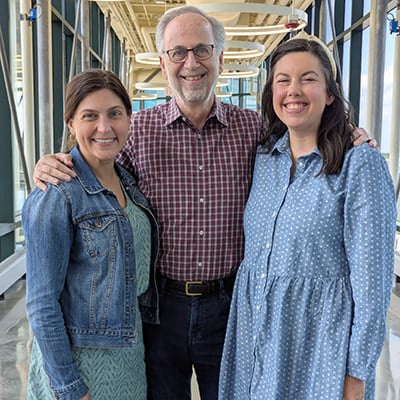
When Katelyn Walser, RN, and Mariah Charland, RN, walk the halls of Children’s Mercy today, they do so with a perspective few clinicians ever have. Both once sat in exam rooms as children with kidney failure. Both were patients of Bradley Warady, MD. Both received kidney transplants. And now, as adults, they both work as transplant coordinators, alongside the physician who helped save their lives — guiding families through the same journey they once traveled themselves.
Meet Mariah
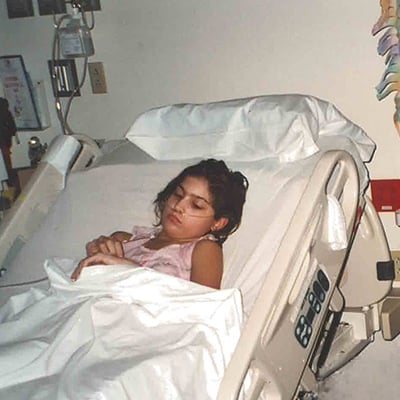
Mariah’s story began at age 12, when a sudden, unexplained illness led to a diagnosis of kidney failure and an urgent life-flight transfer to Children’s Mercy. She spent nearly a decade on dialysis, balancing middle school, high school and college while managing complex care.
Her treatment included both peritoneal dialysis and hemodialysis. Peritoneal dialysis uses the lining of the abdomen to filter waste from the blood and is often done at home, typically overnight. Hemodialysis uses a machine to clean the blood and usually takes place several times a week in a clinical setting. Both methods require careful coordination and discipline.
During her senior year of college, she received a kidney transplant from her stepfather. “I took finals one week and had a transplant the next,” she said. “A few weeks later, I was back in class.” More than a decade later, her transplant continues to function well, a daily reminder of what is possible with expert care and determination.
Meet Katelyn
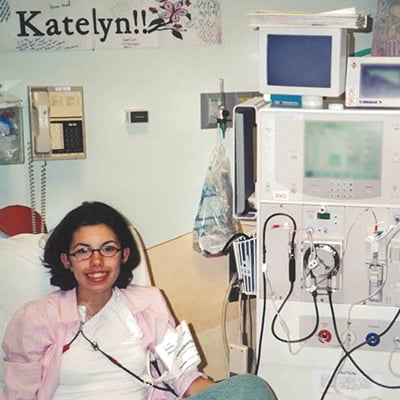
Katelyn’s diagnosis came at age 12 after weeks of unexplained symptoms. Lab work revealed severe kidney failure, and she began hemodialysis almost immediately. Her mother became a living donor, giving Katelyn her kidney just before her freshman year of high school.
That kidney lasted more than 13 years. When it eventually failed, Katelyn returned to dialysis. She briefly tried peritoneal dialysis but had complications and had to pivot to hemodialysis treatments. For the next couple of years, she went back on hemodialysis before receiving a second kidney transplant from a deceased donor in her late 20s at a Kansas City adult hospital.
“I’ve had a great medical team and pediatric care at Children’s Mercy,” she said. “I’m really grateful for that.”
Kindred spirits
Katelyn and Mariah’s paths first crossed not in a clinic, but at Camp Chimer, a summer camp for children on dialysis or living with kidney transplants, hosted by the National Kidney Foundation with Children’s Mercy providing medical support. Both attended as campers, finding something rare: a place where no one asked why they took medications or needed special care. What makes Camp ChiMer especially meaningful is that campers can safely swim — something many dialysis patients cannot do, due to infection risk. For one week, limits fall away.
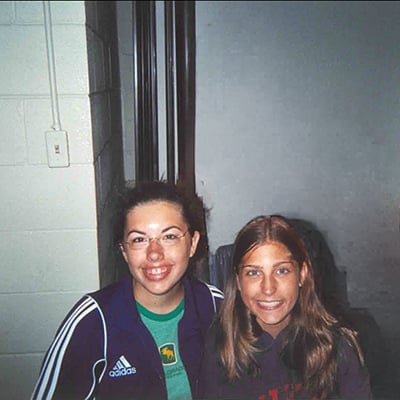
Over time, they returned as volunteer junior counselors, mentoring younger campers who were just beginning their own journeys, and today, they return as Children’s Mercy staff, who still have tons of fun with the kids, but now also help with their medical needs. This year marks the 40th anniversary of both the Kidney Transplant Program and Camp Chimer, a milestone that underscores how generations of patients have grown up, given back and come full circle.
Following in their footsteps
Inspired by the nurses and care teams who supported them, both women pursued nursing careers. One example is Nephrology nurse Trudi, who was a nurse to both Katelyn and Mariah when they were patients, that they now work with as transplant coordinators.
Katelyn always knew she wanted to work in the medical field even before she got sick. Once diagnosed, she was very engaged and fascinated with every part of her care, so she thought she’d be a doctor. By the time her junior year of college rolled around, she realized being a physician wasn’t for her, but she was still interested in the medical field.
“And one day it just clicked and occurred to me, ‘Oh my gosh, I love my transplant coordinator. We have a great relationship. Maybe that’s what I pursue,’” said Katelyn. “’It puts me in the field I want to be in and I can help patients going through something similar to what I’ve gone through.’ And so that’s what I did!”
Katelyn returned to Children’s Mercy during nursing school and later joined the kidney transplant team. Mariah spent years in adult emergency and intensive care nursing before coming back to Kansas City and accepting a transplant coordinator role — with Katelyn’s encouragement.
“I loved my nurses! You just really got to know them, their energy … they were so smart and fun, it didn’t seem like a job to any of these nurses,” Mariah said. “And that's when I was like, ‘This is what I want to do.’ We were just intuitively drawn to the pathophysiology of kidney disease. So it just seemed natural for me.”
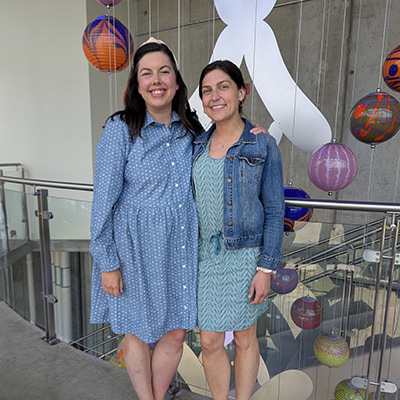
Today, as transplant coordinators, Katelyn and Mariah are central to each patient’s care. They educate families before transplant, coordinate evaluations and testing, monitor lab results, communicate medication changes and often make the life-changing phone call when a donor kidney becomes available. They serve as the steady connection between physicians, surgeons and families during some of the most emotional moments of care.
A great leader and mentor
Working alongside former patients is especially meaningful for Dr. Warady, whose leadership helped Children’s Mercy Nephrology rank in the top 10 nationally by U.S. News & World Report for more than 10 years.
“There could be no better individuals sharing their experiences and expertise with our patients,” said Dr. Warady. “They’re still wearing those shoes. They relate in ways most of us can’t.” He added that their presence strengthens the program and reassures families that a full, healthy future is possible.
For Katelyn and Mariah, that leadership left a lasting impression. Both agreed: Dr. Warady’s patients know he cares deeply and they never want to let him down.
First, they were patients. Now, they are partners in care. Katelyn and Mariah’s journeys reflect what’s possible when expert care, compassion and belief in a child’s future come together — and when that child grows up to help lead the way forward.