
Whole-person Support Through Heart Transplant: Dexter’s Story
Meet Dexter
When Dexter was born, doctors knew his heart would need to be watched closely. He had a problem with his mitral valve, a valve in the heart that did not close the right way. For many years, it did not slow him down much and Dexter grew up feeling mostly like a typical kid.
Now 17, Dexter loves being outside. He enjoys drawing, fishing and listening for birds. He can tell which bird is nearby just by hearing its call. He also likes to cook and spend time with his grandparents, who help teach him at home.
As Dexter got older, doctors learned more about his heart. After his father needed a heart transplant, the family learned the condition could be genetic and Dexter and his siblings should be tested to determine appropriate treatment and monitoring. Dexter and one of his brothers tested positive for genetic cardiomyopathy, and his heart was closely monitored near home.
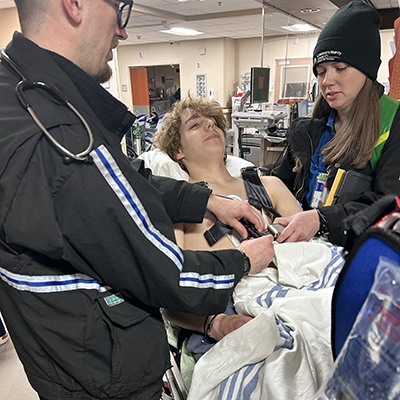
Then everything changed. Dexter’s symptoms suddenly became more serious, and he went into an abnormal heart rhythm. He needed urgent care and was flown from Manhattan, Kan. to Children’s Mercy in Kansas City so he could receive specialized pediatric heart care. Over time, doctors saw that his mitral valve was leaking more and his heart was getting weaker.
At first, doctors hoped they could fix Dexter’s mitral valve and send him home. But once surgery began, they saw how sick his heart truly was. The valve could not be fixed. Dexter would need a heart transplant to live.
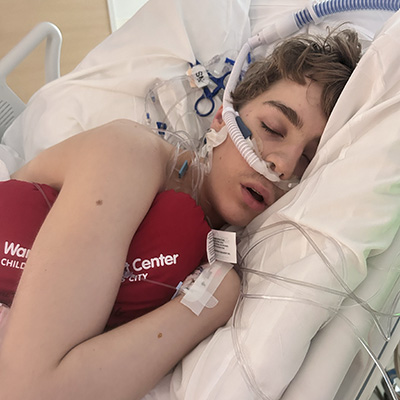
When Dexter woke up and learned the news, he was worried. “I thought it would be fine and I’d just be in and out of the hospital,” he said. Instead, he was facing a long stay and a life-changing surgery. “I was scared,” Dexter shared, especially when he realized he would not be going home soon.
During this time, Dexter and his family were under a lot of stress. They experienced an unexpected loss, and coupled with Dexter’s heart issues, being in the hospital and away from home for weeks felt overwhelming and exhausting. Dexter later said it felt like “forever” while he was living it, even though it was only a small part of his life in the end.
At Children’s Mercy, the care team focused on Dexter as a whole person, not just his heart. Doctors and nurses were honest and kind. They explained every step and answered his questions. “They explained everything,” Dexter said, including his medicines and machines. Hearing clearly “I’m going to live” helped calm his fears.
To help Dexter stabilize while he waited for a transplant, his team used a special heart device to help his heart pump blood. Dexter was the first patient to receive this device at Children’s Mercy, which added different stresses to his family. “It was scary to know he’d be the first,” said Dexter’s mom, Carson. But his clinicians explained what it would do and that it is commonly used with adults. Just 2 weeks later, a new heart became available and he received his transplant in March 2026.
After surgery, the changes in Dexter were clear, and his mom noticed right away. “When I saw his pink cheeks, I realized how long it had been since I’d seen color in his face” she said. It felt like her son came back overnight.
Dexter remembers waking up feeling confused but relieved. “I’m alive and I made it,” he thought. He was thankful for the people around him. “I was just happy that I wasn’t alone,” he said.
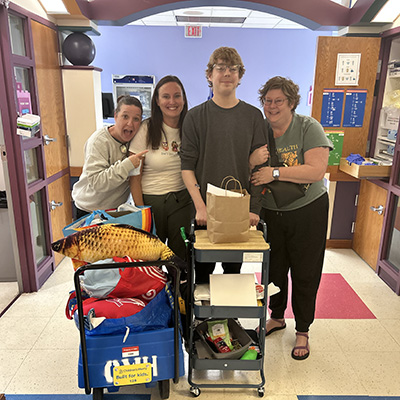
Leaving the hospital after months inside felt strange. The sunshine felt brighter and the air smelled stronger than he remembered. Still, it felt good to be outside again and moving forward.
Today, Dexter continues to heal. He takes his medicine, goes to weekly check-ups and stays in close touch with his care team. They help him manage refills, lab work and questions so nothing falls through the cracks.
For other kids and families facing a transplant or mental health struggles, Dexter keeps it simple. “It’s going to be fine,” he says. “Take your meds. Trust your doctors. Make time for yourself. Take deep breaths.”
Dexter’s journey shows that healing takes more than medicine. It takes support, honesty and people who walk with you through the hardest moments.