
Going to the Epilepsy Monitoring Unit (EMU) at Children’s Mercy
Everyone's brain is unique. During your stay in the EMU, doctors and nurses will learn more about how your brain works.
Checking In
When you arrive at the hospital, you and your family will stop at the Guest Services desk.

Then you will ride the elevator to the EMU and check in with the nurses.
The nurse will take you to a room where you and your family will stay during your EMU visit.
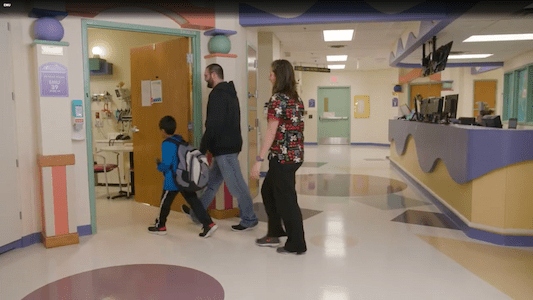
You will have your own room. It may look like this.

You can bring your favorite blanket and toy from home.
Things You Can Expect During Your Stay
- A parent or caregiver can stay with you.
- You may need to stay in bed or close to your bed.
- Doctors, nurses, and technicians will check on you often.
You can watch TV, play games, read books, and do activities in your room.
Getting ready for your Test
You will wear a special bracelet with your name on it.

The nurse will put a blood pressure cuff on your arm or leg. It will squeeze for a few seconds, like a tight hug.
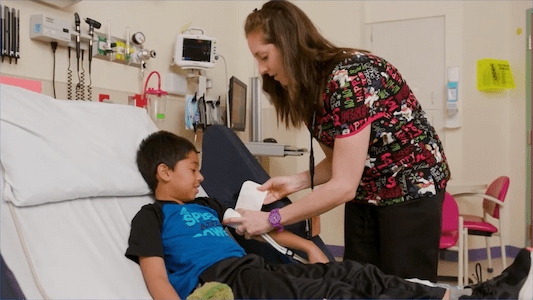
The nurse will measure how tall you are and how much you weigh.
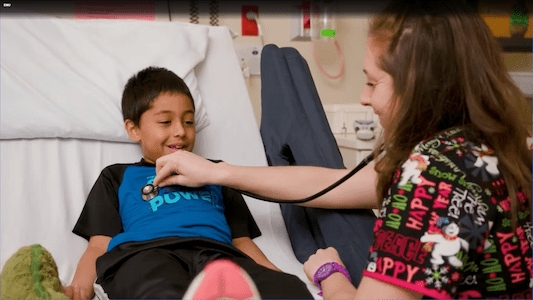
The nurse will listen to your heart with a stethoscope.
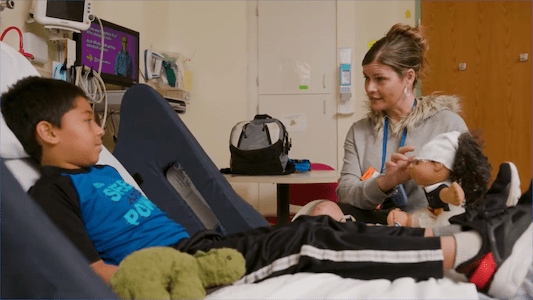
A staff member will teach you about the special test the doctors and nurses will do to learn more about how your brain works.
An EMU technician (tech) will help you get ready for your test. The tech will use lots of different supplies.

The tech will use a red crayon to make small marks on your head.

Electrodes are small, round stickers. Each sticker has a wire that connects to a computer. The computer shows how your brain is working.
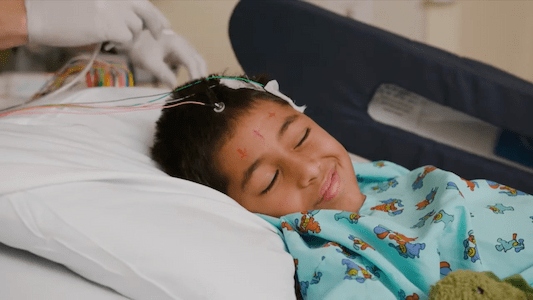
The tech will put lotion on your head to clean the places that are marked with the red crayon.
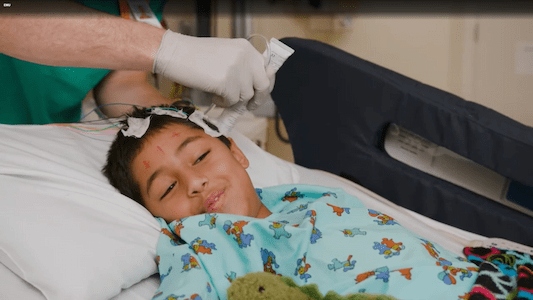
You can watch an iPad, movie, or show while the tech works.
The tech will use special glue to help the electrodes stay in place. Gauze is a soft white fabric that helps protect them.
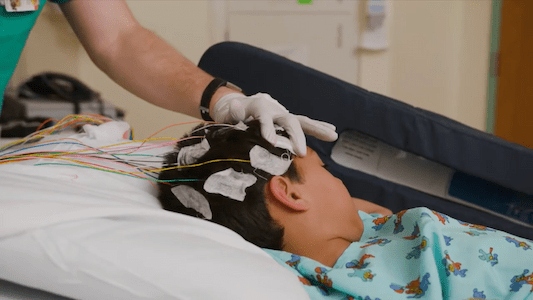
The tech will use a small tube to blow air on your head to dry the glue. It may feel cool and tickly.
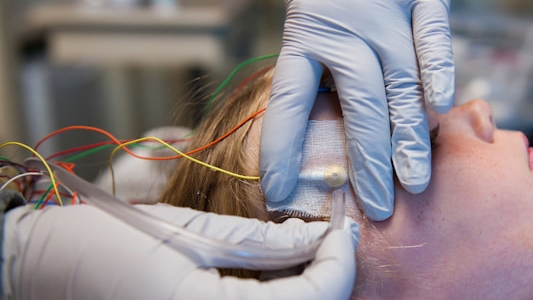
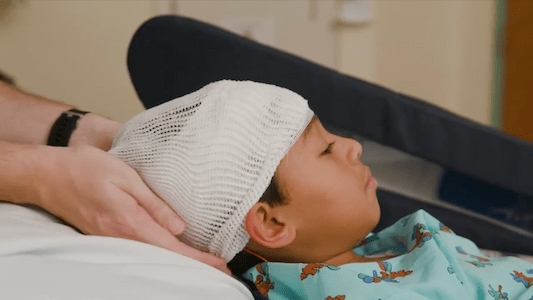
The tech will put a soft bandage around your head to keep everything in place.
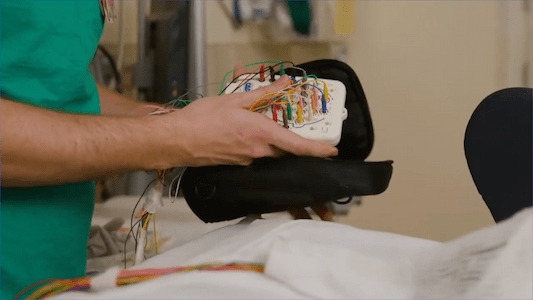
The tech will plug the wires into a small box that stays with you during the test.
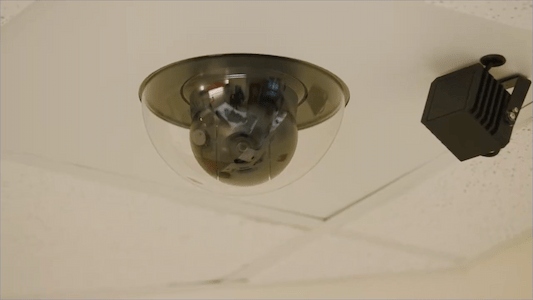
There is also a camera in your room. The camera records what is happening during your stay. The camera helps doctors learn more about how your brain and body work together.
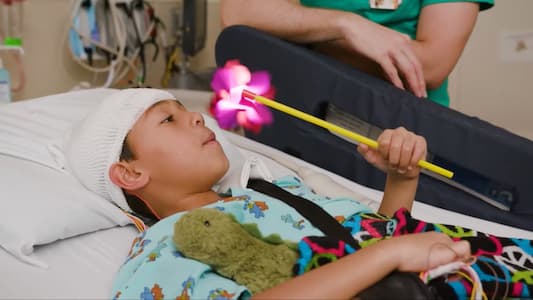
During your test, you will need to do things like blow on a pinwheel for 3 minutes. The tech will tell you what you need to do.
The tech may shine a flashing light near your face. You will be asked to keep your eyes open and closed at different times.
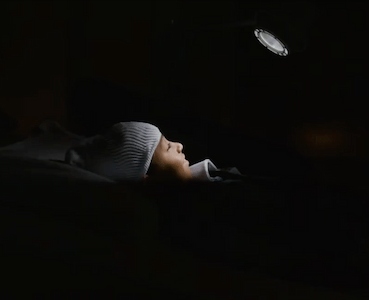
Doctors and other team members will visit your room and talk with you and your family.
Getting an IV
You may need an IV. An IV is a tiny straw that goes into a vein to give your body medicine. If you need an IV, we can help you learn more about it.

You can play games, read books, watch movies, do crafts, and spend time with your family in your room.
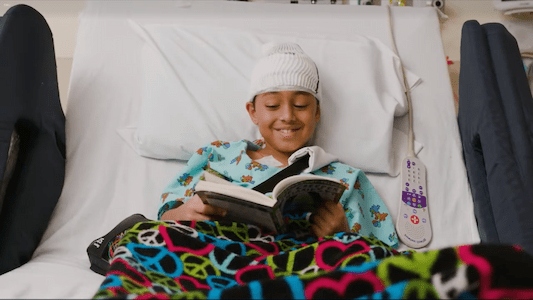
When your test is finished, the tech will remove the electrodes and bandages. If you have an IV, it will be taken out. Then you can change into your regular clothes and go home.
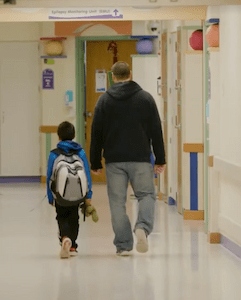
Thank you for learning more about the EMU!
It is okay to feel excited, nervous, curious, or unsure. Ask questions and share your feelings with your family, nurse, tech, or child life specialist.